About the Museum
The Nevada Museum of Art is the state’s only art museum accredited by the American Alliance of Museums (AAM) and a member of the Association of Art Museum Directors (AAMD). Founded in 1931, the Museum was co-founded by Dr. James Church, a pioneering climate scientist, humanist, and interdisciplinary scholar; the Latimer Art Club, a group of dedicated regional landscape painters; and Charles Cutts, whose gift of rare books and modest art collection helped solidify the institution’s foundation. Their shared vision—grounded in art, science, and respect for the environment—set the course for the Museum’s enduring mission.
In 2009, the Museum established the Institute for Art + Environment, an internationally recognized research center and library devoted to exploring creative interactions between people and their environments. At the heart of this inquiry is respect for the Indigenous communities of the Great Basin. The Institute houses archives, special collections, and rare books connected to the Great Basin Native Artists organization; artists Beverly Buchanan, Judy Chicago, Helen and Newton Harrison, Michael Heizer, Walter De Maria, Lita Albuquerque, Trevor Paglen; and organizations including Burning Man, High Desert Test Sites, Desert X, and the Center for Land Use Interpretation. The Museum’s permanent collection is organized into four thematic areas: the Robert S. and Dorothy J. Keyser Art of the Greater West Collection, the Carol Franc Buck Altered Landscape Photography Collection, the Modern and Contemporary Art Collection, and the E. L. Wiegand Work Ethic in American Art Collection. Together, these holdings advance the Museum’s mission to inspire diverse encounters with art and culture while fostering interdisciplinary inquiry.
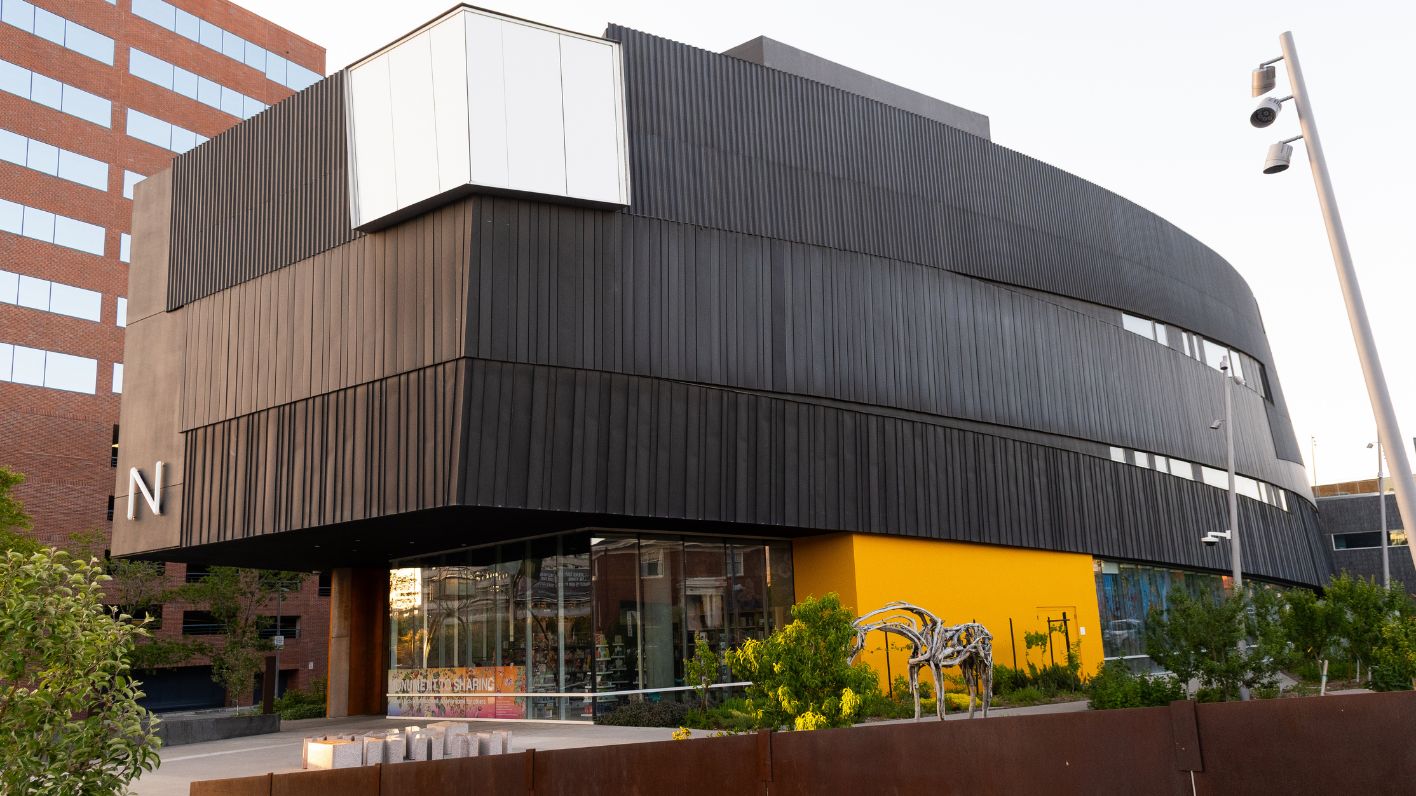
The Museum’s identity is also shaped by its unique location at the intersection of the Sierra Nevada and the Great Basin. Designed by architect Will Bruder, the four-level, 120,000-square-foot building opened in 2003 in Reno’s cultural district. Inspired by the geological formations of the Black Rock Desert, the building embodies the Museum’s emphasis on the relationship between art and environment. In 2025, the Museum completed a major renovation and expansion with the Charles and Stacie Mathewson Education + Research Center, strengthening its role as a hub for learning, scholarship, and community engagement. Special contemporary artist commissions and world-class touring exhibitions continue to bring fresh perspectives and global dialogue to the Museum’s dynamic offerings.
Mission
We are a museum of ideas. While building upon our founding collections, we foster diverse and inspirational encounters with art and cultures and encourage interdisciplinary investigation. Foregrounding the role of art and its relationship to the environment, the Nevada Museum of Art is an educational resource for everyone.
Accreditation
The Nevada Museum of Art is the only accredited art museum in the state of Nevada. Recognized for following best practices as outlined by the American Alliance of Museums, the Museum is committed to continuous institutional improvement and change. With accreditation, the Museum joins the ranks of other significant institutions such as the Metropolitan Museum of Art in New York and the San Francisco Museum of Modern Art. Just 5% of all museums in the US earn AAM accreditation.
Land Acknowledgement
The Nevada Museum of Art acknowledges the traditional homelands of the Waší∙šiw (Washoe), Numu (Northern Paiute), Newe (Western Shoshone), and Nuwu (Southern Paiute) people of the Great Basin. This includes the 28 Tribal Nations that exist as sovereign nations and continue as stewards of this land. We appreciate the opportunity to live and learn on these Indigenous homelands.