Indigenous peoples have inhabited the land now known as Nevada for millennia, maintaining enduring relationships with the waterways, plants, animals, and natural resources through sophisticated systems of environmental knowledge and sustainable practice.
With the arrival and settlement of non-Native peoples in the Great Basin beginning in the late eighteenth century, Indigenous lifeways were profoundly disrupted through processes of dispossession, displacement, and colonial expansion. In response to these changing political and social conditions, Indigenous communities established formal systems of governance to protect their peoples, lands, and sovereignty, while negotiating survival within evolving colonial and federal frameworks. This process frequently required the adoption of new governmental structures and administrative practices informed by non-Native political institutions.
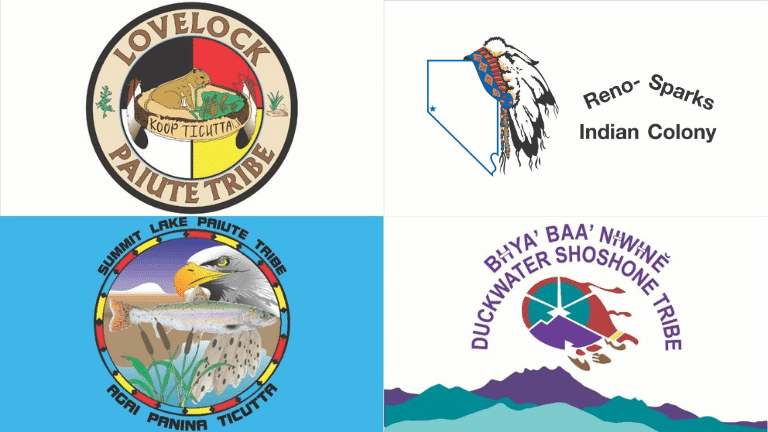
Today, Nevada is home to twenty-eight Tribal Nations, Colonies, and Bands. Twenty are recognized by the United States government as distinct political entities, while eight are affiliated with parent Tribes, functioning as separate governments within a broader nationhood structure. Each Tribal Nation exercises jurisdiction over its distinct lands, governance, and legal systems. The unique histories, geographies, cultural traditions, and political identities of these Nations are reflected in the designs of their flags.
The Nevada Department of Native American Affairs works in partnership with Tribal Nations to strengthen government-to-government relationships, support cultural preservation, and advance the recognition of Indigenous communities throughout the state.
This exhibition is presented by the Nevada Department of Native American Affairs.